
Address
Building 34, Taixing Industrial Zone, Hongxing Community, Songgang Street, Bao’an District, Shenzhen, Guangdong 518105, China



How to Tell If AC Compressor Is Bad in Your Car and What to Rule Out Before Replacing It
By C-Loong Precision Industry (Shenzhen) Co., Ltd
Knowing how to tell if AC compressor is bad in a car starts with one fact: a symptom on its own does not prove it. Warm air, a new noise or a clutch that stays still can come from the compressor, but low refrigerant, a fault in the clutch circuit or a blocked expansion valve can cause the same signs. The safer way is to rule out those causes in order and judge the compressor last.
That order matters because many compressors taken off cars turn out to have nothing wrong with them. The fault was elsewhere in the system, or the diagnosis was wrong.[1][2] A compressor replaced for the wrong reason costs money and leaves the original fault in place.
This guide goes through the signs first, then the refrigerant charge, the gauge readings and the clutch, then compressors that have no clutch, and ends with a short checklist and what to do once the compressor is confirmed bad. The first checks need no tools: whether the clutch turns, whether there is oil around the compressor and whether the condenser fan runs. Checking the refrigerant charge and the pressures needs workshop equipment.
Page Contents
Product Categories
Key Takeaways
- The main ways a car AC compressor fails are that it can no longer build pressure, it seizes, or it leaks refrigerant at its shaft seal. A symptom such as warm air or noise does not prove any of these on its own.
- The refrigerant charge is confirmed before the compressor is judged, by recovering and weighing it. A static pressure reading or a can of refrigerant cannot show whether the charge is right.
- With the charge right and the compressor turning, a low side that reads too high and a high side that reads too low, or close to the low-side reading, points to a compressor that is not pumping, once a stuck-open expansion valve and, where fitted, the control valve have been ruled out.
- A clutch that does not engage can be a clutch, power or switch fault rather than a compressor fault, and the clutch can often be replaced on its own.
- On a compressor without a clutch, the fault codes, the control signal and the control valve are checked before the compressor itself.
Signs of a Bad Car AC Compressor and the Other Faults That Look the Same
The common signs of a bad car AC compressor are warm air from the vents, a noise when the AC is switched on, oil or refrigerant leaking at the compressor, and a compressor that does not engage. Each of these signs also has causes outside the compressor, and the table shows what to check first for each one:
| What you notice | Compressor or clutch fault it can point to | Other causes of the same sign | What to check first | Read next |
|---|---|---|---|---|
| Warm or weak air from the vents | The compressor is not building pressure | Low refrigerant; a blocked or stuck expansion valve or orifice tube (the fixed restriction some systems use instead of an expansion valve); a blend door (the flap that mixes hot and cold air) or heater valve letting in heat | The refrigerant charge, then the gauge readings | Refrigerant and gauge sections below |
| A noise that starts when the AC is switched on | Damage inside the compressor, or a worn clutch | The wrong amount of refrigerant, incorrect belt tension, or a line touching the body | Switch the AC on and off and listen for the noise to start and stop with the clutch | Clutch section below |
| Oil or refrigerant leaking at the compressor | A leak at the compressor’s shaft seal | A leak elsewhere in the system | Oily residue around the compressor; a leak detector or UV dye | Refrigerant section below |
| The clutch does not engage, or the compressor does not turn | A clutch or coil fault, or a seized compressor | A blown fuse, a faulty relay, no power at the clutch, or the low-pressure switch (which cuts power to the clutch when pressure is too low) cutting out because refrigerant is low | Whether the clutch’s center plate (the disc on the front of the compressor that the clutch pulls in) turns with the pulley when the AC is on | Clutch section below |
| Cold while driving but warm at idle | — (condenser airflow is checked before the compressor) | A condenser fan that does not run, a fault in the fan circuit, or a dirty or blocked condenser | Whether the condenser fan runs with the AC on | Gauge section below (condenser airflow) |
| The AC fuse keeps blowing | A short in the clutch coil | A short or high current elsewhere in the circuit, such as the relay or wiring | The coil, the relay and the wiring, each tested on its own | Clutch section below |
None of these signs proves on its own that the compressor has failed. Low refrigerant appears in several of the rows: it makes the air warm, it can stop the clutch from engaging through the low-pressure switch, and it shifts the gauge readings, so the charge is the first thing to confirm. Before any gauges are connected, a quick look at the clutch also helps: if its center plate does not turn with the AC on, the clutch section below explains what to check, and low refrigerant is one of the causes listed there.
Low Refrigerant Can Look Just Like a Bad AC Compressor
Low refrigerant can produce the same warm air and the same stationary clutch as a failing compressor, so the charge has to be confirmed before the compressor is judged. With too little refrigerant, both gauge sides read low and the AC cools poorly even when the compressor is healthy. The low-pressure switch, which cuts power to the clutch when the pressure falls too low, can also keep the clutch from engaging to protect the compressor. On a variable displacement compressor, one that changes how much refrigerant it pumps, a low charge can make the compressor reduce its own output, so a good unit looks weak.
Why Doesn’t a Static Pressure Reading Prove the Charge Is Right?
A static reading, taken with the engine off, shows whether there is refrigerant in the system, not whether there is enough. With the engine off, the pressure depends mainly on temperature. A system that has lost a large part of its charge can still show a normal static pressure.[2] The clearest result is a reading close to zero: the refrigerant has leaked out, and the leak has to be found before anything else.
Why Doesn’t Adding a Can of Refrigerant Settle It?
A can adds an unknown amount of refrigerant to a system whose current charge is also unknown, so afterwards the charge is still not known and the compressor still cannot be judged. Too much refrigerant raises the pressure on both sides and the AC still cools poorly, which can make a good compressor look faulty. If leak sealant has been added to the system, it cannot be flushed out reliably, so the parts it has reached may have to be replaced when the system is repaired.[3]
How Is the Charge Set Correctly?
The charge is checked by recovering the refrigerant from the system, weighing it and comparing that amount with the figure on the vehicle’s label or in its manual. If refrigerant is missing, the leak is found and repaired, using an electronic leak detector or UV dye with a UV lamp; an electronic detector can find very small leaks. The system is then evacuated, which means pumped down to remove air and moisture, and refilled with the specified weight. This needs a recovery and charging machine, so it is normally done in a workshop.
If the charge is right and the air is still warm, the next question is whether the compressor is building pressure, and the gauge readings answer it.
What AC Gauge Readings Reveal About a Failing Compressor
With the refrigerant charge confirmed, AC gauge readings show whether the compressor is building pressure. The low side is the suction side going into the compressor, and the high side is the discharge side coming out of it. A low side that reads too high with a high side that reads too low, or both sides close together, points to a compressor that is not pumping. An expansion valve stuck open can cause a similar pattern, so it has to be ruled out too. An engaged clutch only shows that the compressor is being driven; the gauges show whether it is actually doing its work.
Under What Conditions Should the Gauges Be Read?
Gauges should be read with the engine warm, the AC at maximum cold and the system settled, under the conditions given in the vehicle’s manual. Connect them to the low-side and high-side service ports and take the readings with the engine warm, the AC set to maximum cold and the blower at the speed the manual gives, once the system has run for a few minutes and the needles have settled. Measure the air temperature at the center vent and the outside temperature at the same time, because both readings are compared with the vehicle’s specification. The manual sets the remaining conditions, such as engine speed and whether the doors are open, and these differ from one car to another.
Pressures rise and fall with the outside temperature, so a reading only means something next to the pressure chart in the vehicle’s service information. On many cars the low side settles at around 2 bar (about 30 psi) when the system works normally. The right figure still depends on the car and the conditions.[4] The high side changes so much with the weather that there is no single normal number for it. What tells you most about the compressor is how the two sides compare.
Which Pressure Readings Point to a Bad Compressor?
A low side that is too high with a high side that is too low, or close to the low-side reading, is the pattern that points to the compressor itself, and a stuck expansion valve can produce a pattern very close to it. In the table, too high and too low mean compared with the pressure chart in the vehicle’s service information for the same conditions:
| Low side | High side | What else you notice | Most likely cause | Next step |
|---|---|---|---|---|
| Too high | Too low, or close to the low side | No signs of the expansion valve flooding the evaporator (see the next section) | The compressor is not pumping because of internal wear or damage[1] | The stop test below; on a compressor with an electronic control valve, also the control valve checks |
| Too high | Varies | The suction line (the larger pipe back to the compressor) is very cold and sweating or frosted | The expansion valve is stuck open or opens too wide | The next section on the expansion valve |
| Too low | Too low | Weak cooling | Not enough refrigerant | The refrigerant section above |
| Very low, or in vacuum | Varies with where the restriction is | Frost or ice at one point in the lines, such as the expansion valve, orifice tube or receiver drier (the filter that holds moisture in the system) | A restriction at that point | The next section on the expansion valve |
| Too high | Too high | A hot condenser, or a cooling fan that does not run; cooling is often worse at idle, when the condenser depends on its fan for airflow | Too much refrigerant, or too little air through the condenser | Blow more air or spray water over the condenser; if the pressures drop, the cause is airflow or the charge |
| Normal | Normal | The air at the vents is still warm | Air not being cooled on its way to the vents: a blend door, heater valve or evaporator problem | The blend door and heater valve checks in the vehicle’s service information |
Two things can make the first row misleading. Both sides also read close together when the compressor is not being driven at all, which is why the clutch section below matters. And on a compressor with an electronic control valve, a fault in the valve or in its control signal can produce the same pattern, which the section on clutchless compressors covers.[6]
Is It the Compressor or the Expansion Valve?
A failing compressor and an expansion valve stuck open can both leave the low side reading too high, and the temperature of the suction line tells them apart. When the valve is stuck open, it floods the evaporator. The suction line, the larger pipe from the evaporator back to the compressor, then runs very cold, sweats or frosts.[3][4] Without those signs, a stuck-open valve is less likely, and the stop test below helps confirm whether the compressor is the cause. A valve or orifice tube that is blocked shows the opposite pattern: the low side drops very low, sometimes into vacuum, and frost forms at the point where the flow is restricted.
What Happens to the Pressures When the Compressor Stops?
In the stop test, pressures that meet almost at once when the compressor stops point to leaking valves inside the compressor.[3] To check this on a compressor with a clutch, keep the gauges connected, switch the AC off and watch both needles; a compressor with leaking valves can no longer hold the pressure it builds. Together with the first row of the table, and once a stuck-open expansion valve has been ruled out, this is strong evidence that the compressor itself has failed. A compressor without a clutch keeps turning when the AC is off, so this test does not apply to it in the same way.
Before blaming the compressor for readings that barely move, make sure it is actually turning, because a compressor that is not driven gives the same flat readings. On a compressor with a clutch, that means checking the clutch.
A Bad Compressor Clutch Doesn’t Always Mean a Bad AC Compressor
A compressor whose clutch does not engage has not necessarily failed. The cause can be the clutch itself, the power that feeds it, or a switch that is keeping it off, and the clutch can often be replaced without changing the compressor. The checks below separate a clutch problem from a compressor problem.
How Do You Check If the Clutch Engages?
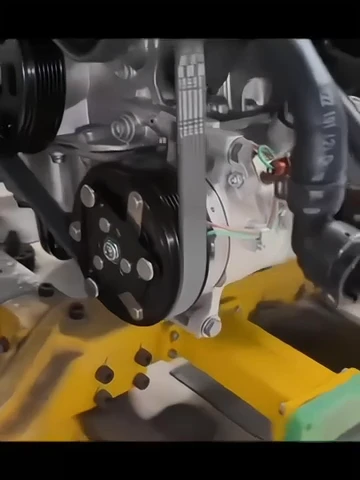
The pulley on the front of the compressor turns whenever the engine runs, but the plate in its center turns only when the clutch pulls it in. With the engine running and the AC switched on, watch the center plate: if it turns with the pulley, the clutch has engaged and the compressor is being driven; if it stays still, the compressor is not being driven. Some variable displacement compressors that have a clutch keep it engaged the whole time the AC is on rather than switching it on and off, and that alone is not a fault.
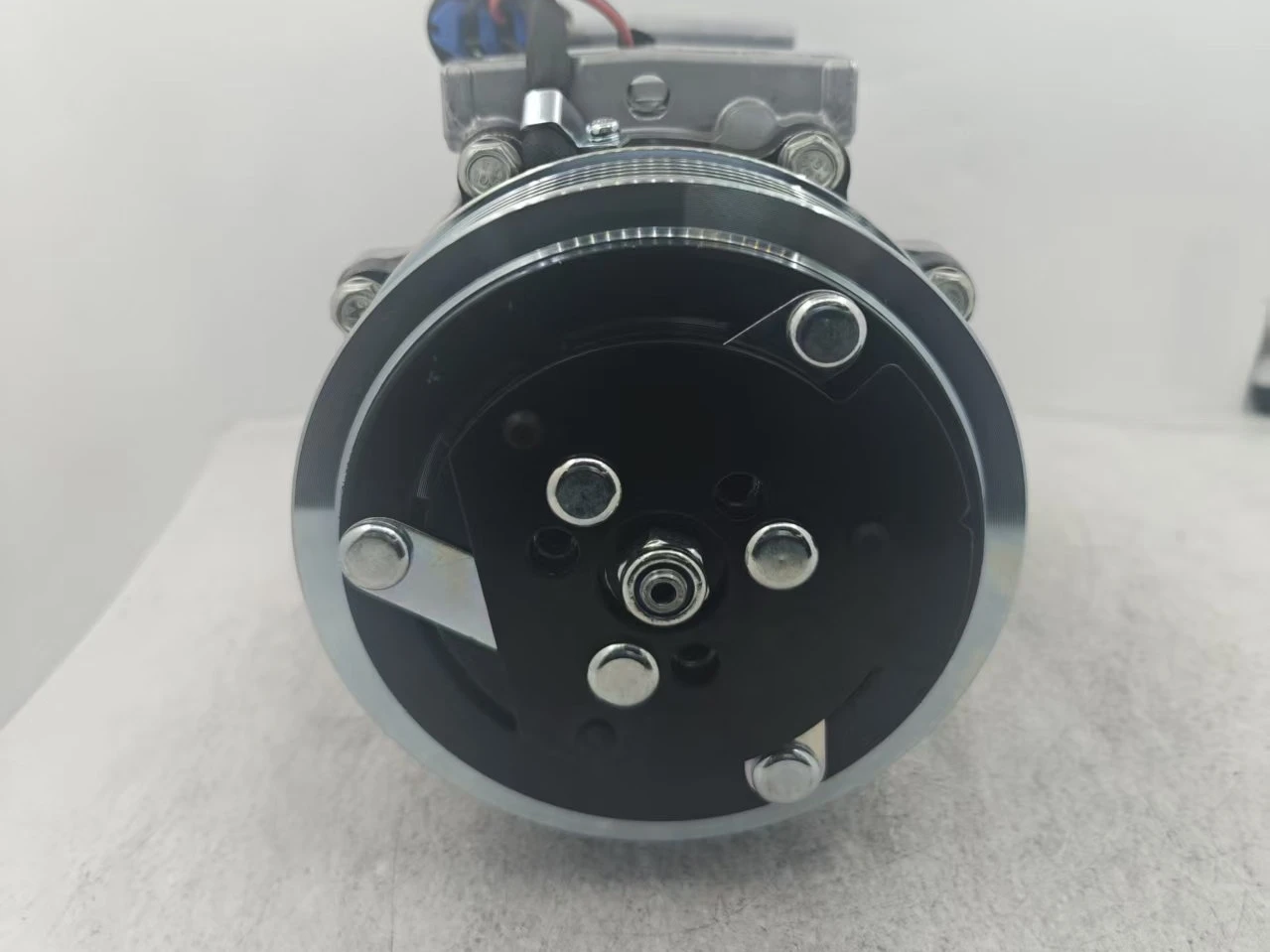
The same on-and-off check helps with noise. A noise that starts and stops with the clutch can come from the compressor or the clutch. The wrong amount of refrigerant, incorrect belt tension or a line touching the body can do the same, so a noise alone does not prove the compressor is bad. A noise that is still there with the AC off is less likely to come from inside the compressor; the pulley, the belt or other belt-driven parts are more likely sources.
Why Won’t the Clutch Engage If the Compressor Is Fine?
When the center plate stays still, the reason can lie outside the compressor itself:
| Cause | How it shows | What it means for the compressor |
|---|---|---|
| Blown fuse or faulty relay | No power reaches the clutch connector | Not a compressor fault on its own; if the fuse blows again, see the last row |
| Low refrigerant | The low-pressure switch keeps the clutch off to protect the compressor | Not a compressor fault; confirm the charge (refrigerant section above) |
| Open clutch coil | Power reaches the connector, but the coil shows no continuity on a resistance meter and the clutch stays still | A clutch fault, not a compressor fault |
| Air gap too large (the gap between the clutch plate and the pulley) | Power is present and the coil is sound, but the clutch is too weak to pull in | A clutch fault, not a compressor fault |
| A fuse that keeps blowing | A short or high current in the circuit | Test the coil, the relay and the wiring separately |
The quickest dividing line is power at the clutch: with the engine running and the AC on, the voltage at the clutch connector, measured with the connector plugged in, should be close to battery voltage. No power points back to the fuse, relay, switches or control module, including the low-pressure switch reacting to a low charge; power with a clutch that stays still points to the clutch itself, or to a compressor that has seized.
Can the Clutch Be Replaced Without the Compressor?
On a compressor with a clutch, the clutch can often be replaced on its own, and replacement clutches are sold as separate parts, including C-Loong’s AC compressor clutches. A failed clutch can also be the result of another problem, so it is worth finding out why it failed before replacing it.
Checking the clutch only works on a compressor that has one, and many compressors do not.
Clutchless AC Compressors Need a Different Check, Starting With the Control Valve
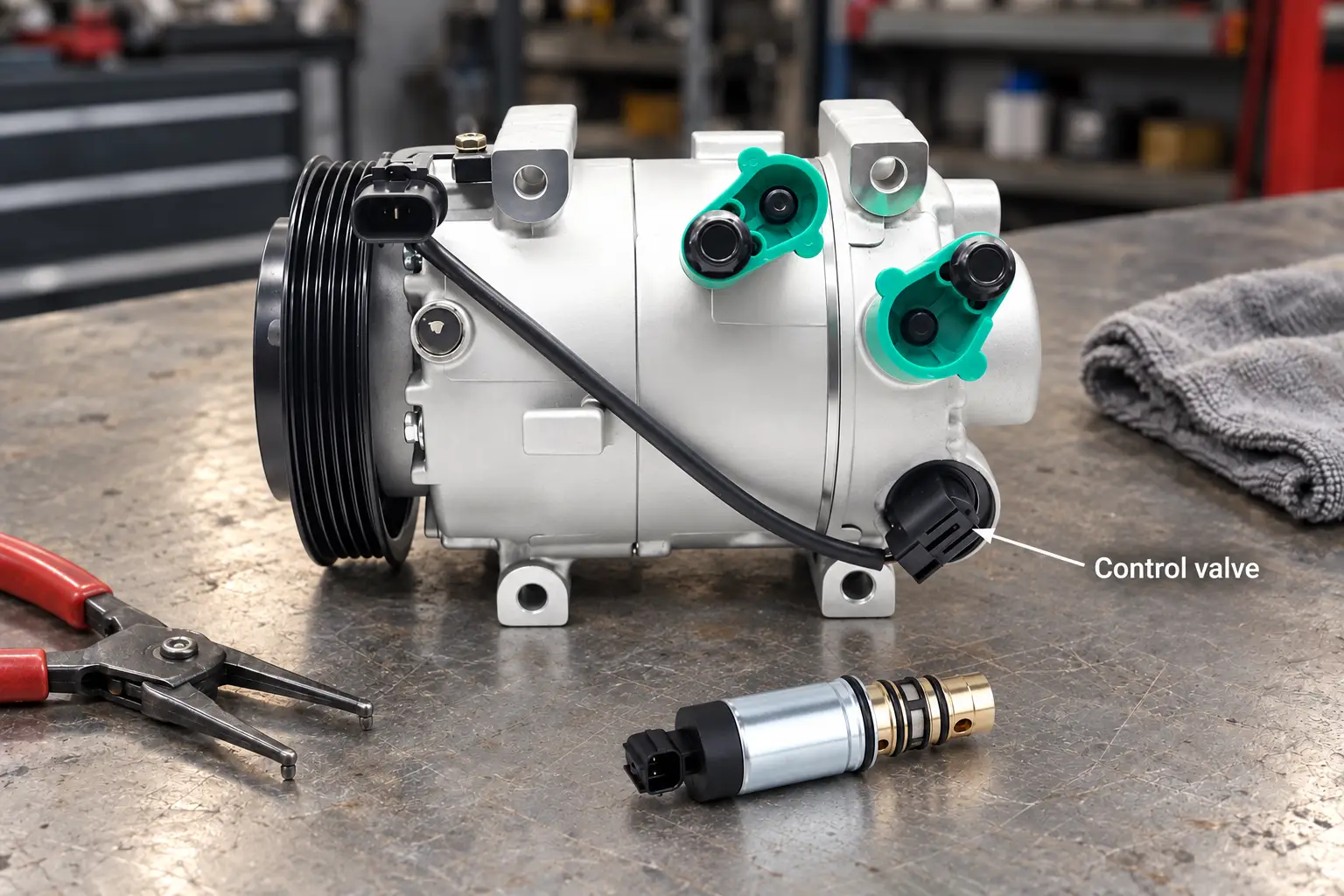
A compressor without a clutch turns whenever the engine runs. Its output is set by an electronic control valve that follows a signal from the vehicle’s control module, so the first checks are the control valve and the signal that drives it, not the compressor itself.[1][5] Watching for a clutch tells you nothing here, and a fault in the valve or its signal can make a healthy compressor look weak.
What Should Be Checked Before the Compressor?
Before the compressor, check the fault codes, the control signal and the control valve with its connector. Start with the fault codes: read them and deal with them, because some AC control modules switch the system off when certain codes are set.[6] Then use a scan tool or an oscilloscope to check that the module is actually commanding the valve. Check the valve connector and its pins as well, because a poor contact there can look like a failed compressor.[7] Skipping these checks risks replacing a compressor that is not faulty.
Can the Control Valve Be Replaced on Its Own?
On some vehicles the carmaker sells the control valve on its own; on others it is sold only as part of the compressor. C-Loong makes AC compressor control valves for almost all makes, including models whose valve the carmaker does not sell separately, and a new valve usually costs less than a whole compressor.
How Do You Confirm the Compressor Itself Has Failed?
The compressor itself has most likely failed when the control signal is correct and the control valve tests good but the pressures do not respond, or when it has seized. To check, change the load and watch the pressures: when the blower speed or engine speed changes, or when the valve is driven directly, the pressures should change with it. If the signal changes but the pressures do not, the fault is in the control valve or inside the compressor, and a test of the valve, where the manufacturer gives one, tells the two apart. Sometimes the pulley turns but the center of the compressor does not. That means the overload protection in the pulley, a part that disconnects the pulley when the compressor locks up, has released. It can also release because of a fault elsewhere in the belt drive, so with the engine off, check whether the compressor shaft can still be turned: a shaft that will not turn confirms a seized compressor.
Each check so far rules out one cause, and together they make a short list to run before the compressor is called bad.
A Quick Checklist Before You Call the AC Compressor Bad
Before calling the compressor bad because it is not pumping, check each of these points:
- The refrigerant was recovered, weighed and refilled to the specified amount, and any leak was repaired.
- On a compressor with a clutch, the clutch engages with power at its connector; on a compressor without a clutch, the fault codes, the control signal and the control valve have been checked.
- The gauge readings were taken under the conditions in the vehicle’s manual, with the vent and outside temperatures noted.
- The readings show a low side that is too high and a high side that is too low or close to the low-side reading, not the pattern of a low charge, a restriction or an overcharged system; on a clutchless compressor, the pressures also do not respond to a change in load.
- The expansion valve or orifice tube has been ruled out by the suction line temperature and the absence of frost at a restriction.
On a compressor with a clutch, pressures that meet almost at once when it stops add further evidence that its internal valves are leaking.
If a workshop has told you the compressor is bad, the same list works as a set of questions to ask: which of these checks were done, and what did they show?
Two other failures are confirmed in other ways: a compressor that has seized, so that neither the clutch nor the belt can turn it, and refrigerant leaking at the compressor’s shaft seal, confirmed with a leak detector rather than by oil alone. When every point holds, or one of these is found, the compressor itself is the most likely fault, and the next step is to replace it without letting the same cause damage the new one.
Fix the Cause Before Fitting a New AC Compressor
Once the compressor is confirmed bad, find out why it failed before fitting a new one, because the same cause can damage the replacement. A compressor that has failed inside can send debris through the system. The system is therefore flushed, and the receiver drier or accumulator (the part that holds moisture on systems with an orifice tube) and the expansion valve or orifice tube are normally replaced with the compressor. Which parts must be replaced depends on the vehicle maker. The reasons a new compressor can fail the same way and the full car AC compressor replacement procedure are covered in separate guides.
The replacement also has to match the vehicle exactly, and the OE number is the most precise way to confirm it. C-Loong supplies car AC compressors matched by OE number.
Workshops and distributors that replace compressors on several vehicle models can send the OE numbers or vehicle models they need, the quantities and the country they sell in. C-Loong’s sales team checks each OE number against the matching compressor and replies with a quotation, and a first order can mix compressor models, from 20 units in total. If you are not sure what to send, describe what you need in the inquiry form and the sales team will work it out with you.
Frequently Asked Questions
Low refrigerant can cause the same warm air as a bad compressor, so the charge is checked first: the refrigerant is recovered and weighed against the vehicle’s specification, and only then do the gauge readings say anything about the compressor. Adding refrigerant without weighing it does not answer the question.
If the clutch’s center plate does not turn with the AC on, the cause can be the clutch, its power supply or a switch rather than the compressor, and the clutch can often be replaced on its own. If the clutch engages, the refrigerant charge is right and the expansion valve has been ruled out, but the gauges still show that the compressor is not pumping, the compressor itself is the likely fault.
A seized AC compressor does not have to stop the engine’s belt drive. On a compressor with a clutch, the pulley spins on its own bearing whenever the clutch is off, without turning the compressor. On compressors with overload protection in the pulley, the protection disconnects the pulley from the compressor shaft when the compressor locks up.[1] The pulley then simply idles, and the belt and the other parts it drives keep running while the AC stops working.
Related Guides
- What is the AC compressor in a car and how it works
- How variable displacement compressors work and fail
- AC compressor control valve guide
- AC compressor clutch replacement guide
References
- MAHLE, Automotive air conditioning – A compact guide for the workshop (2021).
- Sanden, Compressor Diagnosis (2006) and SD Compressor Service Guide.
- DENSO, Troubleshooting Charts – Compressor and Installation Guide A/C Compressor.
- Toyota, factory repair manual (copy hosted by an owners’ site), section Check refrigerant pressure using manifold gauge set.
- Mercedes-Benz StarTuned, Always Spinning: Variable Displacement A/C Compressors (2014).
- MOTOR Magazine, Diagnosing Variable Displacement Compressors (2017).
- Hyundai, technical service bulletin 17-HA-002, ECV equipped variable A/C compressor diagnosis (2017).
Confirm Fit & Get a Quote
Share your OE number, vehicle model, or a photo — whatever you have. We’ll match the right part and send you pricing, MOQ, and lead time.
Prefer WhatsApp?Chat with us on WhatsApp