
Address
Building 34, Taixing Industrial Zone, Hongxing Community, Songgang Street, Bao’an District, Shenzhen, Guangdong 518105, China



What Is the AC Compressor in a Car, How Does It Work and What Should You Know About It?
By C-Loong Precision Industry (Shenzhen) Co., Ltd
The AC compressor in a car is the pump that drives the air conditioning. Most compressors are driven by the engine’s accessory belt, while electric vehicles and many hybrids use electric compressors with their own motor. The compressor draws in refrigerant, the gas that carries heat around the AC system, from the evaporator, the part inside the car that cools the cabin air. It compresses the gas and sends it to the condenser, where the cabin heat leaves the car.
Squeezing the gas makes it hot and raises its pressure, so in the condenser, a radiator-like part, the heat can pass to the outside air and the refrigerant turns back into a liquid, ready to absorb cabin heat again. When the compressor stops pumping, the cooling stops.
Page Contents
Product Categories
Most cars use a belt-driven AC compressor of one of two kinds, named after their displacement, the amount of refrigerant they move with each turn:
- Fixed displacement compressors pump the same amount of refrigerant on every turn, so a clutch switches them on and off to control the cooling.
- Variable displacement compressors can pump more or less refrigerant. A control valve sets how much, and some of these compressors have no clutch at all.
This guide explains where the AC compressor sits, how it works inside and how the main types differ. It then covers the signs of a failing compressor and how long one lasts, and ends with the details that must match when a replacement is chosen.
Key Takeaways
- A car AC compressor is a pump, usually driven by the engine’s accessory belt, that compresses refrigerant gas and keeps it moving through the air conditioning system.
- The AC compressor does not make cold air itself. The cooling happens in the evaporator, where liquid refrigerant evaporates and absorbs heat from the cabin air, and the compressor keeps this process going.[1][2]
- How long a car AC compressor lasts depends largely on whether the system has the right amount of oil and refrigerant and stays clean and dry. Low oil, leaks, dirt and moisture can all damage a compressor.
What Does an AC Compressor Do in a Car?
A car AC compressor does three jobs in the air conditioning system. It keeps the refrigerant moving around the system. It compresses the refrigerant gas, so its pressure and temperature rise high enough for the gas to give off its heat in the condenser. And it keeps oil moving too: the oil travels with the refrigerant and lubricates the compressor’s moving parts.
How Does the Compressor Move Refrigerant Through the AC System?
The compressor pushes the refrigerant through a closed loop of five main parts, and at each part the refrigerant changes its pressure or its state:
| Part | What happens there | The refrigerant leaves as |
|---|---|---|
| AC compressor | Compresses the gas, which also heats it up | Hot gas at high pressure |
| Condenser | Passes the heat to the outside air through its pipes and fins, so the gas cools and turns into a liquid | Liquid at high pressure |
| Receiver drier | Separates dirt and trapped air from the liquid and removes moisture | Clean, dry liquid at high pressure |
| Expansion valve | Acts as a narrow restriction: as the liquid squeezes through, its pressure drops | Liquid at low pressure, entering the evaporator |
| Evaporator | The liquid evaporates and absorbs heat from the air that the blower pushes through it, and that cooled air goes into the cabin | Gas at low pressure, flowing back to the compressor |
Some systems use an orifice tube, a fixed narrow tube, instead of an expansion valve. These systems also have an accumulator instead of a receiver drier. The refrigerant still goes through the same changes.
The loop has two sides. From the compressor to the expansion valve, the refrigerant is under high pressure; from the expansion valve back to the compressor, it is under low pressure.
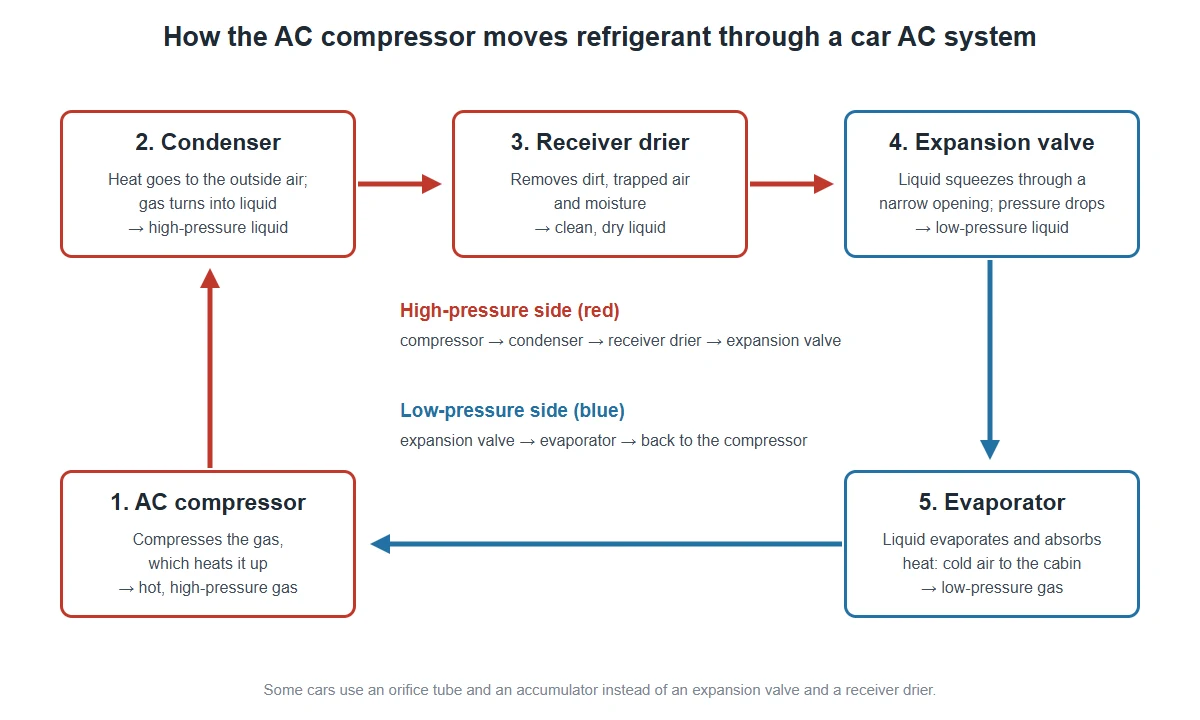
The cold air comes from the evaporator, not from the compressor. The compressor’s part is to keep the refrigerant moving and to raise its pressure, so that the refrigerant can release its heat outside the car and come back to the evaporator ready to absorb more.
To see these jobs in a real car, the first step is finding the compressor under the hood.
Where Is the AC Compressor Located in a Car?
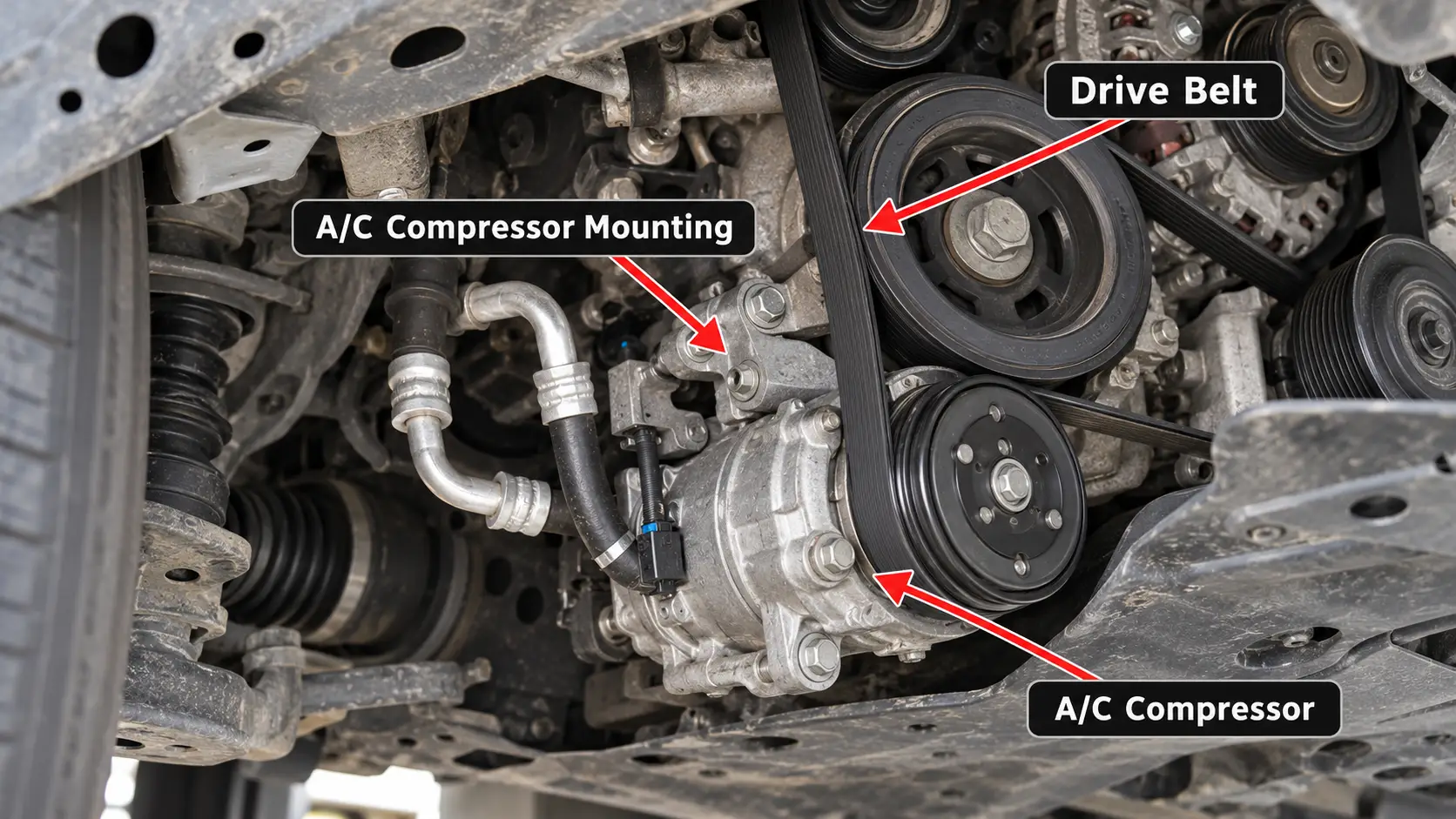
The AC compressor is mounted on the engine, in a spot where the engine’s accessory belt can turn its pulley. Its exact position changes from one engine to another, so an easy way to find it is to follow the belt:
- Open the hood and find the accessory belt. This is the ribbed rubber belt that runs around several pulleys at the end of the engine. Besides the AC compressor, it also turns the alternator and, on many engines, the water pump.
- Follow the belt from pulley to pulley. Each pulley belongs to a part that the belt drives.
- Look for the part with two refrigerant lines attached. The lines are metal pipes or hoses. The part on the belt that has them connected to it is the AC compressor.
What Does an AC Compressor Look Like?
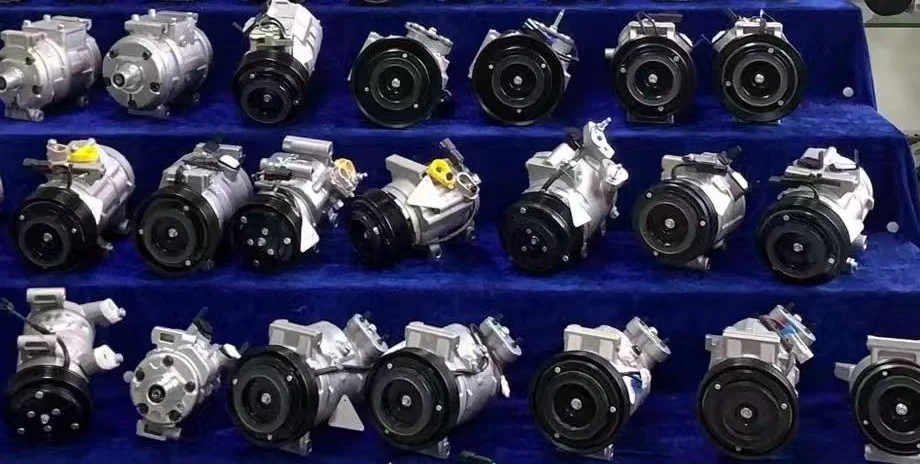
A belt-driven AC compressor is a metal unit with a pulley on the front, two refrigerant connections and an electrical plug. These three features set it apart from the other parts on the belt.
- The pulley and the clutch plate. On compressors that have a clutch, a flat round plate sits in front of the pulley. The pulley turns whenever the engine runs, but the plate only turns when the AC is switched on. With the engine running, switch the AC on and off and watch the front of the compressor from a safe distance, keeping hands and loose clothing away from the belt: if the plate starts and stops spinning, you are looking at the compressor. Compressors without a clutch have no separate plate, and their front turns with the pulley all the time.
- Two refrigerant connections. One is the low-pressure inlet, which brings refrigerant gas back from the evaporator. The other is the high-pressure outlet, which sends the compressed gas on to the condenser.
- An electrical plug. A wire with a plug supplies power to the clutch coil or, on a variable displacement compressor, to the control valve.
If the compressor has no belt pulley at all, the car has an electric compressor, the kind used in hybrid and electric vehicles.
Finding the compressor shows only its outside. What happens inside it decides how well the AC cools.
How Does an AC Compressor Work?
An AC compressor works by turning the spin of its pulley into a pumping motion. In a piston compressor, an angled plate on the shaft drives a set of pistons back and forth, and each piston draws in low-pressure refrigerant gas, squeezes it and pushes it out at high pressure. It all starts when you switch on the AC.
What Happens When You Turn On the AC?
On a compressor with a clutch, the pulley spins whenever the engine runs, but the shaft inside the compressor stays still. The AC compressor clutch connects the two. It has three parts: an electromagnetic coil, the pulley and a hub plate on the front. When you switch on the AC, the car’s control unit sends current to the coil. The coil becomes a magnet and pulls the hub plate against the spinning pulley, so the shaft starts to turn and the compressor begins to pump. When the current stops, the plate lets go and the compressor stops pumping.
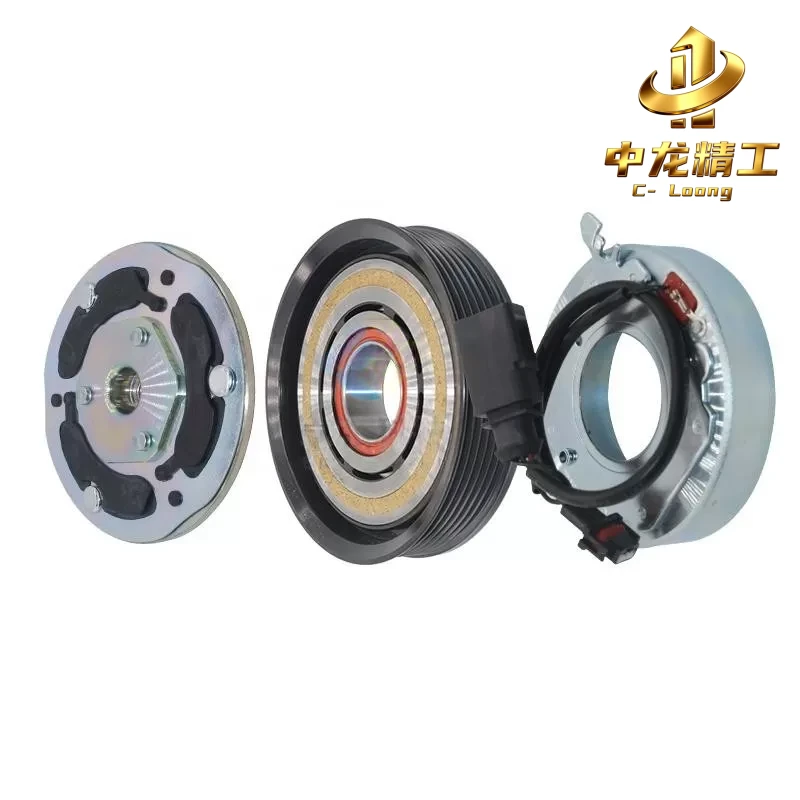
Some compressors have no clutch at all and are turned by the pulley the whole time the engine runs. How they still control the cooling depends on their type, covered in the next section.
Once the shaft is turning, the work moves inside the compressor.
What Happens Inside the Compressor When It Runs?
The shaft carries the turning motion into the compressor body. There, an angled plate driven by the shaft (a swash plate or, in some designs, a wobble plate) pushes a set of pistons in and out of their cylinders. Each piston stroke does the same three things:
- Suction. As the piston moves back, a suction valve opens and lets in low-pressure refrigerant gas coming from the evaporator.
- Compression. As the piston moves forward, it squeezes the gas into a smaller space, so the pressure and temperature of the gas rise.
- Discharge. A discharge valve opens and lets the hot, high-pressure gas out toward the condenser.
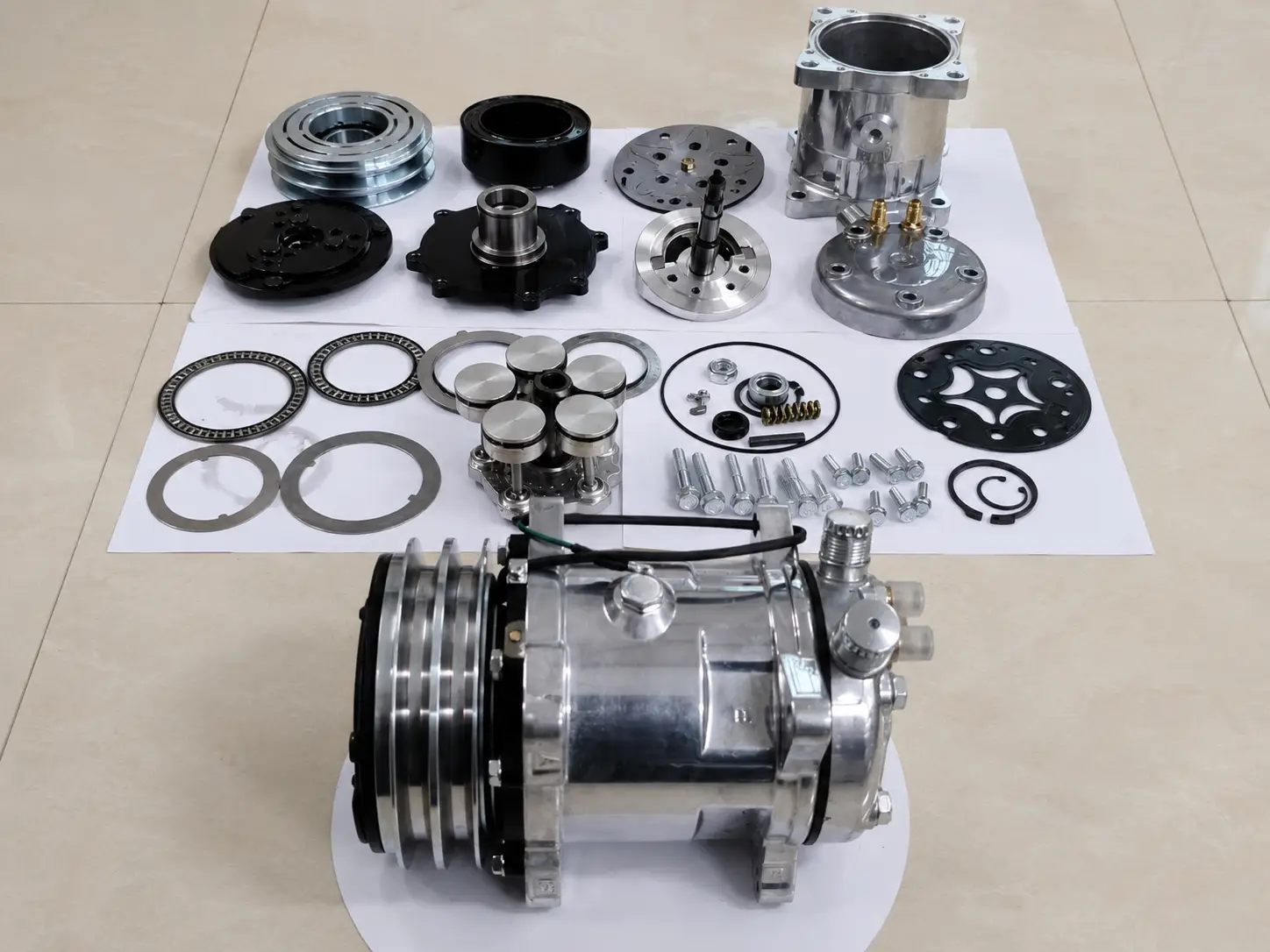
Two more parts shape how the compressor behaves in daily use. On many compressors, the pulley has a built-in overload protection: if the compressor seizes, it separates the pulley from the shaft, so the belt and the other parts it drives keep running.[1][2] Variable displacement compressors also have a control valve that sets how much they pump.
How much the pistons move with each turn depends on the type of compressor.
What Are the Types of AC Compressors?
A useful way to tell car AC compressors apart is by how they control the cooling: there are fixed displacement compressors and variable displacement compressors. Displacement is the amount of refrigerant the compressor moves with each turn of its shaft. Some variable displacement compressors also work without a clutch. By internal design, compressors are also described as piston types or rotary types, the rotary group being vane and scroll compressors.
How Does a Fixed Displacement Compressor Control Cooling?
A fixed displacement compressor moves the same amount of refrigerant with each turn, because its plate stays at one angle. It controls the cooling by switching on and off: when the evaporator is cold enough, the clutch lets go, and when more cooling is needed, the clutch engages again. For this type of compressor, it is normal for the clutch to switch on and off while the AC is running.
How Does a Variable Displacement Compressor Control Cooling?
A variable displacement compressor keeps turning and changes how much it pumps instead. A control valve adjusts the pressure in the space around the plate, called the crankcase, and that pressure sets the angle of the plate. The more cooling the cabin needs, the steeper the plate and the more refrigerant each turn moves.
There are two kinds of AC compressor control valve:
- A mechanical control valve reacts to the pressure on the low-pressure side of the system and adjusts the plate on its own.
- An electronic control valve follows an electrical signal from the car’s AC control unit, so it is connected to the car’s wiring.
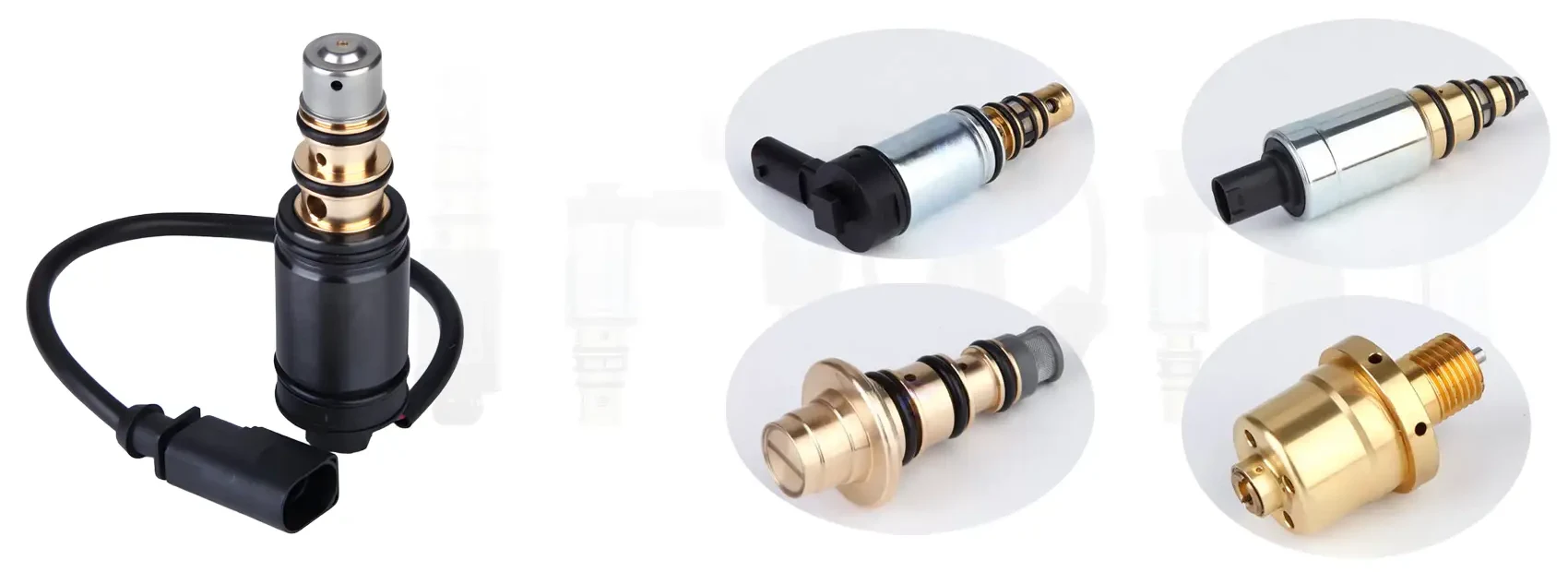
Because a variable displacement compressor does not need to keep cutting in and out, it can use less energy, avoid the jolt when the AC switches on and keep the cabin temperature steadier.[3][4]
How Does a Compressor Without a Clutch Work?
Compressors without a clutch, often called clutchless compressors, are variable displacement compressors. Their pulley turns the shaft whenever the engine runs, even when the AC is switched off. Instead of stopping, they turn their output down to a very low level when no cooling is needed, so the control valve does the job a clutch would otherwise do.[1]
How Can You Tell Which Type Your Car Has?
With the engine running, look at the front of the compressor from a safe distance:
- No separate hub plate, and the front turns all the time: the compressor most likely has no clutch, which makes it a variable displacement compressor.
- A hub plate that engages when you switch the AC on: the compressor has a clutch. This alone does not show whether it is a fixed or a variable displacement compressor.
The most reliable way to identify the exact compressor is its OE number, the part number of the original compressor. Without it, the vehicle’s make, model, year and engine are the next best starting point.
Whatever its type, a compressor tends to show similar warning signs when it starts to fail.
What Are the Signs of a Bad AC Compressor?
The most common signs of a bad AC compressor are noise when the AC is on, weak or no cooling, refrigerant or oil leaking at the compressor, a clutch that does not engage, and a compressor that will not turn at all. None of these signs proves on its own that the compressor has failed, because other faults can cause the same symptoms.[2][5]
To narrow down the cause, check the refrigerant charge, clutch operation, and pressure readings in turn. Our guide explains how to tell if an AC compressor is bad and what to rule out before replacing it.
Bad AC Compressor Symptoms
Each sign points to a different kind of compressor fault, and most of them also have causes outside the compressor:
| What you notice | Compressor fault it can point to | Other causes that give the same sign |
|---|---|---|
| Grinding, rattling or clacking noise when the AC is on | Parts inside the compressor are damaged or broken, such as a valve[5] | A loose belt or a worn idler pulley bearing on the belt drive |
| Weak or no cooling | A failing compressor | Too little refrigerant, or moisture in the system |
| Refrigerant gas or oily stains around the compressor, with cooling that gets weaker over time | A leak at the compressor, for example at the shaft seal, where the shaft leaves the compressor body | A leak somewhere else in the system also lowers the refrigerant and weakens the cooling |
| The clutch hub plate stays still when the AC is switched on | A fault in the compressor or its clutch | An electrical fault, such as no voltage reaching the clutch coil or a faulty relay |
When the compressor itself is the cause, a failure can also affect the parts around it.
What Happens When an AC Compressor Goes Out?
When an AC compressor goes out, the AC cools less or stops cooling. Two further effects matter when the car is repaired:
- If the compressor seizes, its shaft can no longer turn. On a compressor with an overload protection, the pulley is disconnected from the shaft and then only runs idle, so the belt and the other parts it drives keep running while the AC no longer works.
- If the compressor fails inside, it can send metal particles and other debris through the AC system. That debris can clog parts of the system and damage the next compressor, which is why the system is flushed and certain parts are replaced when a failed compressor is changed. Which parts must be replaced depends on the system and the maker’s instructions.[1][2]
So when a compressor gives trouble, the next question is whether the whole unit has to go.
Is It Worth Fixing an AC Compressor?
It depends on which part has failed:
- The clutch. On a compressor with a clutch, the clutch can often be replaced on its own, without changing the compressor, and replacement clutches are sold as separate parts, C-Loong’s among them. A failed clutch, however, is often the result of another problem in the system, so that cause has to be found first. The AC compressor clutch replacement guide explains how to tell a clutch fault from a compressor fault.
- The control valve. Only variable displacement compressors have a control valve; fixed displacement compressors do not.[3][6] Some carmakers do not sell the control valve separately and supply only the complete compressor. As a manufacturer, C-Loong can make replacement control valves for almost all variable displacement compressors, including models whose valve is not sold on its own, and replacing a valve is usually cheaper than replacing the whole compressor. The AC compressor control valve replacement guide explains when a new valve is enough.
- The compressor itself. A compressor that has seized, binds when its shaft is turned or is damaged inside is normally replaced as a complete unit rather than repaired.[1][5]
Before a new compressor goes in, it is worth knowing why the old one failed, because the same cause can damage the replacement.
How Long Does an AC Compressor Last and Why Does It Fail?
There is no reliable figure for how many years or miles a car AC compressor lasts, and when it will wear out is hard to predict. What decides its life are the conditions it works in: a compressor lasts longest when the system has the right amount of refrigerant and oil, stays clean and dry, and the belt drive that turns it is in good condition.[2][5]
What Makes an AC Compressor Fail Early?
Many of the things that shorten a compressor’s life sit in the system around it:
| Cause | What it does to the compressor |
|---|---|
| Too little refrigerant or oil | The oil travels with the refrigerant, so less of it reaches the moving parts. They wear faster and can be damaged. |
| Dirt and metal particles in the system | The particles pass through the compressor, wear its moving parts and can clog parts of the system. |
| Moisture in the system | Moisture can cause corrosion and reduces the lubrication inside the compressor. |
| The wrong oil, or different oils mixed | The oil no longer lubricates the compressor properly, which can damage it. |
| Too much oil or refrigerant | With too much in the system, liquid instead of gas can reach the compressor. Liquid hardly compresses, so it can damage the compressor’s seals and moving parts or even lock the compressor up.[3][5] |
| Faults in the belt drive, such as a worn tensioner | They can damage the compressor or make the overload protection in its pulley release. |
| A dirty or blocked condenser, or a condenser fan that does not work | Pressure and temperature in the system rise, which puts extra load on the compressor. |
Several of these causes stay in the system after the old compressor is removed, which is why a new compressor can fail in the same way.
Why Can a New Compressor Fail the Same Way?
When a new compressor fails early, the cause is often something left over from the old failure or from the way the new one was fitted:
- Debris left in the system. Particles from the old compressor stay in the lines and parts until the system has been flushed.
- Old parts that cannot be flushed. The receiver drier or accumulator and the expansion valve or orifice tube hold dirt and moisture and cannot be cleaned by flushing, so they are usually replaced along with the compressor; which of them must be replaced depends on the maker’s instructions.
- The wrong oil, or the wrong amount of oil. Many new compressors are delivered already filled with oil, but the oil type and amount still have to be checked against the vehicle’s specification before fitting.[2][6]
- A hard first start. Raising the engine speed when the new compressor runs for the first time can shorten its life, so the first start is done at idle.[1][2]
- The original cause not fixed. If the fault that killed the old compressor, such as a leak or a blocked condenser, is still there, it can damage the new one too.
The full replacement procedure is covered in the car AC compressor replacement guide. Once the cause has been dealt with, the next step is choosing a replacement compressor that matches the vehicle.
How Do You Choose a Replacement AC Compressor?
Choosing a replacement AC compressor takes more than matching the vehicle model. The pulley, the voltage, the plug, the pipe connections and mounting points, the control type and the oil all have to match as well. The most precise way to find the right one is the OE number, the part number of the original compressor.
Why Isn’t the Vehicle Model Enough?
The same vehicle model can come with different compressors. Even within one vehicle family, the compressors can differ in displacement, pulley, plug and oil quantity, so a compressor that fits one version may not fit the next. On the other hand, many compressors are built to fit several vehicles, with only small differences such as the number of grooves on the pulley.
So it is the details that decide, not the vehicle name.
Which Details Have to Match?
| Detail | What to check | Why it matters |
|---|---|---|
| Pulley | The belt type and the number of grooves | It has to fit the vehicle’s belt. |
| Voltage | 12 V or 24 V | Compressors are made for both 12 V and 24 V systems, so the voltage has to be stated when you order.[3][5] |
| Plug, pipe connections and mounting | The plug and where it sits, the refrigerant ports and the mounting points | They have to line up with the vehicle’s wiring, pipes and brackets, and their positions can change from one compressor version to another. |
| Control type | With or without a clutch; mechanical or electronic control valve | These are different designs, so check that the replacement uses the same type as the original. |
| Oil and refrigerant | R134a or R1234yf, and the oil approved for it | R134a systems use PAG oil, which comes in several grades, while standard PAG oil is not suitable for R1234yf. The wrong oil can cause early failure and void the warranty.[1][2] |
Before fitting, compare the new compressor’s connections and mounting points with the old one, so any difference shows up before the AC system is opened.
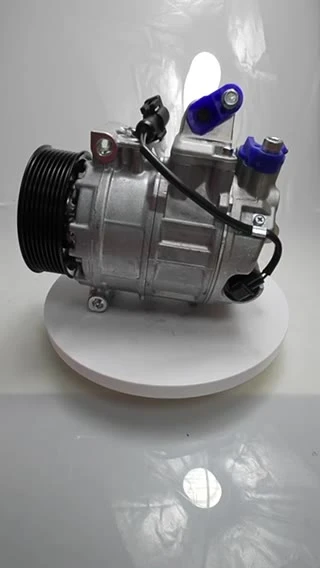
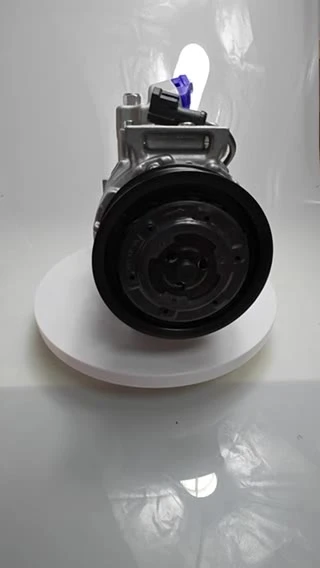
New, Remanufactured or OEM?
Replacement compressors come in three kinds:
- An OEM compressor is made by the company that supplied the original compressor to the car factory.
- A new aftermarket compressor is a new compressor made by a different manufacturer to fit the same vehicles.
- A remanufactured compressor is a used compressor that has been taken apart, cleaned, rebuilt with new parts where the old ones were worn, and tested.[3]
Whichever kind you choose, the details in the table above still have to match. C-Loong supplies new aftermarket AC compressors.
How Do You Confirm the Match?
The OE number is the most precise way to confirm a match, and it is how we check every compressor we supply. Parts catalogues and compressor makers also look up replacements by OE number.
If you don’t have the OE number, start with the vehicle’s make, model, year and engine, then check the pulley, voltage, plug and control type before you order.
Planning a Compressor Range for the Vehicles in Your Market
If you buy compressors for resale or for a repair business, this part is for you. Most wholesale buyers don’t start with one or two compressor models. They order several at once, to find out which ones sell in their market or to have backups ready. With C-Loong, that first order can stay small: the minimum for compressors is 20 units in total, and they can be any mix of models.
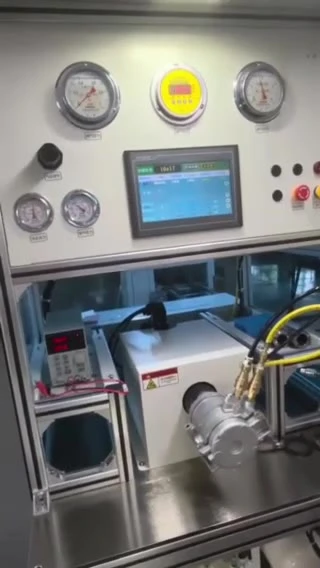
C-Loong is a manufacturer in Shenzhen, China, that has made car AC compressors and control valves for more than 15 years. Because you buy directly from the factory, with no trading company in between, you get a long-term, stable supply and more room for profit on every unit you sell. Every compressor is tested and goes through 3 repeated inspections before it ships, and each one is matched to the vehicle by its OE number.

If you also need control valves, add them to the same inquiry. They are ordered from 20 units per model.
What to Send With an Inquiry
To get started, one line is enough: the OE numbers or vehicle models you need, and the country you sell in.
If you can also tell us roughly how many of each model you expect to sell, and what the range is for, such as filling gaps in a range you already carry or supplying repair shops, our sales team can suggest which models to start with.
If you’re not sure what to send, describe what you need in your own words in the inquiry form, and the sales team will work it out with you.
Order Terms and Warranty
| Item | Details |
|---|---|
| Minimum order | Compressors: 20 units in total, any mix of models. Control valves: 20 units per model |
| Lead time | 7 to 15 days, depending on the models and quantities |
| Samples | Available for testing; sample and shipping costs are agreed case by case, and the sample cost is deducted from the bulk order |
| Payment | T/T, L/C, PayPal or Western Union, depending on the order amount |
| Packing | Export cartons; custom packaging is accepted |
| Warranty | 1 year; full warranty details come with the quotation |
Frequently Asked Questions About Car AC Compressors
Yes. A belt-driven AC compressor is turned by the engine, so running the AC uses extra fuel, and the effect is larger in hot weather. In electric cars, running the AC uses battery power and reduces the driving range.
On many cars, selecting defrost switches the air conditioning on automatically to clear the windshield, so the compressor can run even while warm air comes out of the vents. Whether this happens depends on the car, and some cars only do it above a certain outside temperature.
The price depends on the compressor: its model, its design, such as fixed or variable displacement and with or without a clutch, and the quantity ordered. If you need compressors in volume, send us the OE numbers or vehicle models and rough quantities through the inquiry form, and we will quote based on your needs.
Yes. Alongside 12 V compressors for passenger cars, C-Loong supplies 24 V compressors for trucks and construction machinery, including applications on Hino and Scania trucks and Caterpillar and John Deere machines. As with car compressors, each match is confirmed by the OE number.
Yes. C-Loong can supply compressors under your own brand, and custom packaging is accepted. Details such as the logo, the packaging and the order quantities are agreed with our sales team.
Related Guides on AC Compressors and Their Parts
These published guides go deeper into the parts and repairs covered above:
- How to tell if an AC compressor is bad
- Car AC compressor replacement guide
- Variable displacement AC compressor guide
- AC compressor control valve guide
- AC compressor control valve replacement guide
- AC compressor clutch replacement guide
- Car AC expansion valve replacement guide
References
- MAHLE Aftermarket / Behr Hella Service. Automotive air conditioning – A compact guide for the workshop (2021); Replacing the A/C compressor and flushing the A/C system; Compressors without magnetic clutches (2007); HELLA Tech World, Changing the air-conditioning compressor. https://www.mahle-aftermarket.com/media/homepage/facelift/media-center/klima/kompaktwissen-ac-fahrzeugklimatisierung-en-screen.pdf
- DENSO Aftermarket. A/C tips and tricks brochure; Thermal leaflet (2024); technical bulletins on compressor oil and VAG compressors (2018–2019); Watch out for damper limiter pulley failure (2022). https://assets.denso-am.eu/production/attachments/DENSO-AC_brochure_tips-and-tricks_EN.pdf
- Valeo Service. A/C Compressor Tips & Tricks and Compressor failure causes, technical service bulletins TSB-VSA-VCC-122020-03 and -04 (December 2020); Valeo remanufactured compressors. https://www.valeoservice.com/en-com/passenger-car/air-conditioning-system-parts-cars/valeo-remanufactured-compressors
- MACS Worldwide. MACS Service Report, April 2021, and Section 609 training manual (2018). https://www.macsw.org/common/Uploaded%20files/MACS%20Service%20Reports/2021%20MSR/2021_04msr4web.pdf
- Sanden. A/C compressor guide (2021) and SD Compressor Service Guide. https://sanden.com/objects/AC_compressor_guide_USA_20210730.pdf
- Delphi Auto Parts. A look into our CVC compressor technology and Compressor oil quality and quantity. https://www.delphiautoparts.com/gbr/en/resource-center/compressor-oil-quality-and-quantity
Confirm Fit & Get a Quote
Share your OE number, vehicle model, or a photo — whatever you have. We’ll match the right part and send you pricing, MOQ, and lead time.
Prefer WhatsApp?Chat with us on WhatsApp