
Address
Building 34, Taixing Industrial Zone, Hongxing Community, Songgang Street, Bao’an District, Shenzhen, Guangdong 518105, China

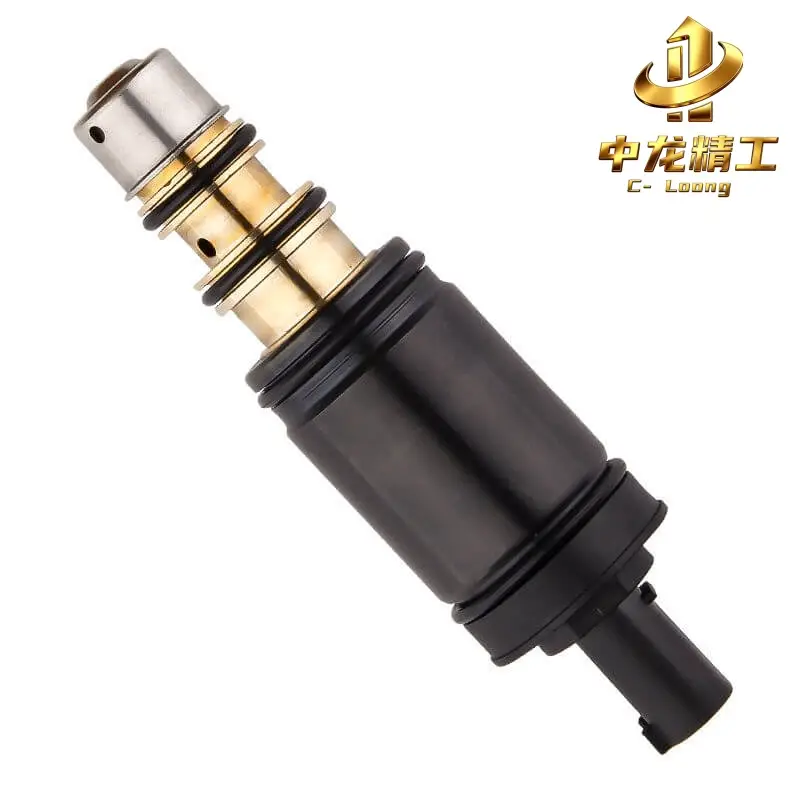
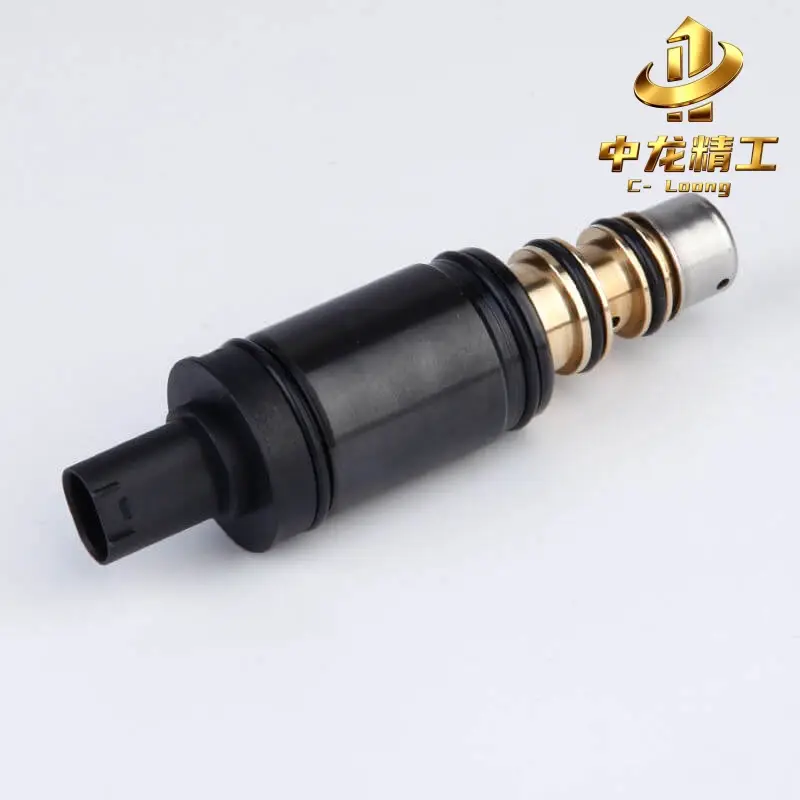
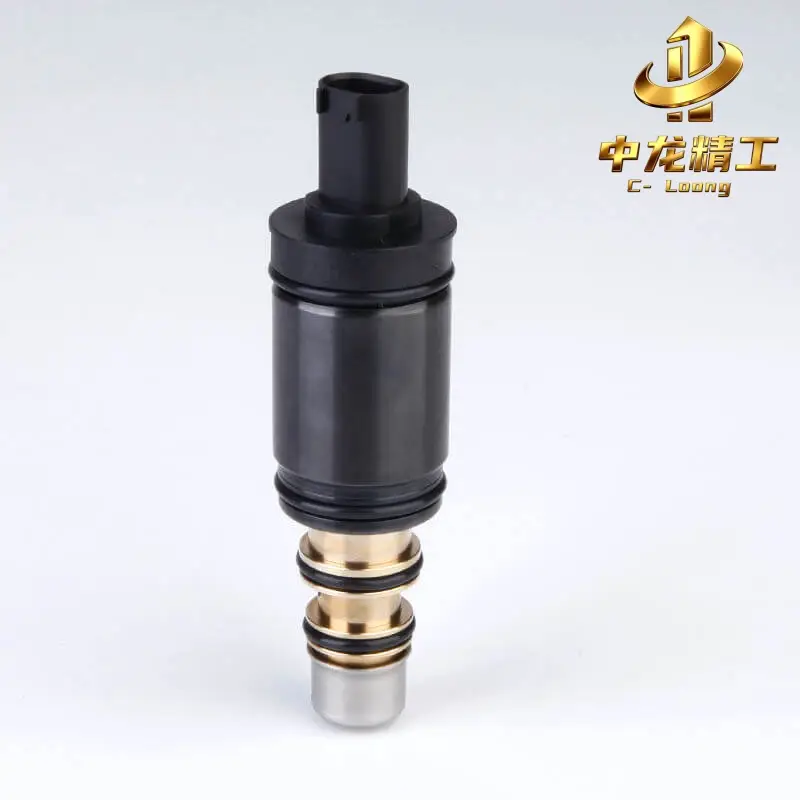
Mercedes Benz AC Compressor Control Valve — CL-2008
Output Regulation: The valve adjusts how much the compressor pumps as cooling demand changes, which is why a car with weak cooling and a compressor that still runs is usually a valve-level repair, not a compressor replacement.
Functional Testing: Coil resistance, insulation, actuation and response are measured on every valve before packing, so one that fits but does not respond never reaches your warehouse.
Market Planning: Tell us the vehicles that dominate where you sell, and we work out which models earn a place on your shelf, so your capital sits in stock that moves.
Delivery Timeframe :Normally 7–15 days. In-stock items may be dispatched on the same day. Final delivery time depends on order quantity and stock availability.
MOQ :20 pieces
The CL-2008 is a compressor control valve used in Valeo compressors fitted to Mercedes-Benz applications. It regulates compressor displacement, so it is the part your repair customers reach for when a system cools inconsistently but the compressor itself still runs.
Whether the CL-2008 is worth stocking depends on your market. In a country where Mercedes-Benz cars are a large share of the parc and most have left dealer service, independent workshops see the same compressor platform week after week and replace the valve rather than the whole compressor — one model covers a lot of the A/C jobs that reach them. Tell us the country you sell into, the vehicle models you handle most and your usual volumes, and we tell you where this valve fits in your range, and which other models are worth adding for the same vehicles.
Product Categories
Page Contents
What the Control Valve Does in the Compressor
The control valve decides how much refrigerant the compressor pumps. A variable displacement compressor does not switch on and off to hold cabin temperature — it changes its own output, and the valve is what tells it to.
It works by regulating pressure in the compressor’s crankcase. That pressure sets the swash plate angle, the angle sets the piston stroke, and the stroke sets displacement. A small change at the valve becomes a large change in cooling at the vents.
So when the valve stops responding correctly, nothing looks broken. The belt turns, the compressor runs, and the complaint that reaches the workshop is weak or inconsistent cooling. That is why the valve sells as a line of its own: the workshop replaces it instead of the compressor.
Other models in our auto AC compressor control valve range cover different compressor platforms and vehicle groups.
Specifications
| Model | CL-2008 |
| Product type | A/C compressor control valve |
| Compressor brand | Valeo |
| Vehicle application | Mercedes-Benz |
| Material | Metal body with plastic components |
| Warranty | 1 year |
| Certification | ISO9001 |
| Availability | In stock — quantity and shipping date confirmed per order |
Looking for another model? The compressor decides the valve, not the vehicle — the same Mercedes-Benz model can carry compressors from more than one supplier. Send the compressor model or a photo of its label, and we confirm which valve covers it. The vehicle model and year alone are enough to start.
Where the Demand for This Valve Comes From
The cars that need this valve are long out of warranty. Passenger cars in the EU now average 12.7 years old (ACEA), and of roughly 280 million vehicles on European roads, about 190 million are more than four years old. Those cars are not going back to a dealer: 82% of EU workshops are not brand-affiliated, and 62% of parts volume already moves through the independent aftermarket (FIGIEFA / Roland Berger).
That is the channel you sell into, and it is where a valve-level repair wins. On a twelve-year-old car, a complete compressor often costs more than the owner is willing to spend — a control valve does not. The workshop keeps the job, the car gets its cooling back, and the part comes from your shelf instead of a dealer counter.
These figures describe the European market as a whole, not the demand for any single model. What they show is where the volume sits: older cars, independent workshops, parts bought outside the dealer network. Tell us which vehicles dominate your market and we will show you which valves in our range fit them.
Why Buy This Valve From Us
ou are not buying one valve, you are building a range that fits your market. That is where we work with you:
We see which models move together. The same valves go out to buyers in different countries, so we can see which applications tend to sell alongside each other on the same vehicles and compressor platforms. When you tell us the vehicles that dominate your market, we come back with a shortlist of models your range does not cover yet — ordered by how common those vehicles are where you sell, and marked so you can see which are ready to quote and which still need one more detail confirmed.
We help you choose between options. For the same application there is often more than one option, and the difference is not always visible in a photo. We compare materials, price and the other factors that matter for your market, and tell you what each difference means in practice — where a lower-cost option is reasonable for a price-sensitive channel, and where it is not worth the risk on a vehicle your customers cannot afford to have back in the workshop. You see both sides before you commit a quantity, not after the first container lands.
We cover what falls outside our range. Send samples, drawings, compressor details or required performance and we review them for development. For products we do not make ourselves, we source them on our industry experience and check the quality of what we source — so one request does not cost you a second supplier.
How Every Batch of CL-2008 Is Checked
Repeat orders depend on stable product quality: the valves in your second order should perform the same as the ones in your first. Every CL-2008 passes at least three checks before it is packed — component inspection, functional testing after assembly, and a final verification against the order.
Incoming components. Valve bodies, coils and connectors are checked for correct identification, configuration, key dimensions and visible condition. Components that do not conform are separated before production, so a deviation is caught at the cheapest point — before it is built into a valve.
During assembly. Component matching, assembly orientation, cleanliness and critical dimensions are checked at the relevant production stages. Cleanliness is controlled here because the valve works inside a sealed circuit: anything introduced during assembly cannot be removed afterwards.
Functional and electrical testing. Completed valves are tested for coil resistance, insulation and applicable diode polarity, then for valve actuation, energizing response and abnormal sticking. Leakage, flow or pressure-response tests are applied according to the valve type. These checks confirm that the valve actually responds when it is energised — something no visual inspection can show, and the difference between a valve that fits and a valve that works.
Final verification and packing. Finished valves are checked against the confirmed model, the order record and the reference sample: key dimensions, connector structure, appearance, quantity and labels. Models are separated and clearly labelled at packing, so each carton matches its packing list when it reaches your warehouse.
If Something Goes Wrong With Your Order
You do not have to work out whose fault it is before you contact us. Tell us what you are seeing, and we start from there.
Step 1 — You open the case. Send five things: the order reference, how many pieces are affected, the compressor model the valve was installed on, clear photos or a short video of the problem, and how it was installed. Send it through the form on this page or to your sales contact. If you only have part of it, send what you have — we will ask for the rest.
Step 2 — You have a reply within about two hours. Two hours of our working day: if your message arrives while we are closed, it is the first thing handled when the day starts, so nothing sits overnight unseen. That first reply is not a verdict on the cause. It is the start of a plan to stop the problem costing you more.
Step 3 — We build that plan around your situation, not from a template. What limits your loss depends on where the stock is, what your customer is waiting for, and what you have already committed to them. Our sales team works that through with you directly. The goal in this step is only one thing: reduce or avoid your loss while the cause is still open.
Step 4 — We work through the cause in a fixed order. First the matching information: was the right valve supplied for that compressor. Then the condition of the product, the packaging and the transport. Then the installation. Then the wider A/C system, because weak cooling can also come from refrigerant charge, sensors, wiring or a blockage. We do not call it a product fault or an installation fault until this is finished.
Step 5 — You get the result, and we agree what happens next with you. We tell you what we found and what it means for the rest of that batch, and the next step is settled with you rather than decided for you.
Our sales team is reachable at every step, not only when the case is opened and closed.
Tell Us What Your Market Runs
A price for one valve tells you very little. What decides whether this line earns money is which models you carry, how closely they match the vehicles around your customers, and what you are not covering yet.
Send us three things — the country you sell into, the vehicle models you handle most, and the volumes you usually move. What comes back depends on what you tell us. It usually starts with which of your vehicles this valve covers and which of them need a different one from our range. From there it is a conversation rather than a form reply: where two options exist for the same application we explain what separates them, including when the cheaper one is the right call; where the vehicles in your market would justify models you do not carry yet, we say so; and we work out the commercial side — price, minimum quantity, lead time — for whatever models the discussion lands on.
And if you are planning further ahead — a vehicle group you want to move into, a market you are opening, a customer you are trying to win — bring that to our sales team as well. Helping partners find more of what their market can absorb is part of how we work, not something that begins after the first order.
FAQ
Yes, we can provide customization based on the specific requirements of our clients. We have an experienced engineering team that can offer tailor-made solutions for air conditioning control valves based on your technical specifications, design requirements, and vehicle types. Please provide detailed requirements, and we will work with you to develop the most suitable product.
Our air conditioning control valves meet several international quality standards, including ISO 9001 quality management system certification, CE certification, etc. In addition, we comply with specific international automotive industry standards such as IATF 16949, ensuring our products have high quality and reliability.
Of course! We can provide samples for you to test and ensure that our air conditioning control valves meet your requirements. The cost of the sample and shipping can be discussed based on the specific situation. If you decide to place a formal order, the sample cost will be deducted from the bulk order.
We usually arrange the production immediately after receiving your payment if we have the item in stock. If the product is customized, the delivery time may be slightly longer. We will confirm the exact delivery time with you once the order is received and ensure timely delivery.
We support various payment methods, including but not limited to T/T (telegraphic transfer), L/C (letter of credit), PayPal, Western Union, etc. The specific payment method can be negotiated based on the order amount and the specific transaction.
We provide after-sales support for all products, including quality guarantees, maintenance advice, and installation guidance. If you encounter any issues during use, you can contact us at any time, and our after-sales team will assist you in solving the problem promptly.
We usually use packaging methods that comply with international shipping standards. Each control valve is individually packed to prevent damage during transportation. Packaging materials typically include cardboard boxes, foam, and plastic bags to ensure the safety of products during transit. For customers with special requirements, we can also provide customized packaging.
Yes, our air conditioning control valves can be widely used in different brands and models of cars. We offer various models and specifications to meet the needs of various automotive air conditioning systems. Whether it is for imported or domestic vehicles, our products can be perfectly matched.
We provide technical support and product training services to ensure that your team can correctly install and use our air conditioning control valves. We can offer support through remote videos, conference calls, or on-site training to provide necessary assistance to your technical team.
Starting a partnership with us is very simple. First, you can contact our sales team via email or phone to let us know your needs. We will provide you with a quotation, product information, and other relevant materials based on your requirements. Once the order is confirmed, we will arrange production and delivery. Our team will provide full support throughout the process to ensure a smooth collaboration.
Confirm Fit & Get a Quote
Share your OE number, vehicle model, or a photo — whatever you have. We’ll match the right part and send you pricing, MOQ, and lead time.